

A Place to Begin Again: How Hope House Helped Lakeisha Rebuild
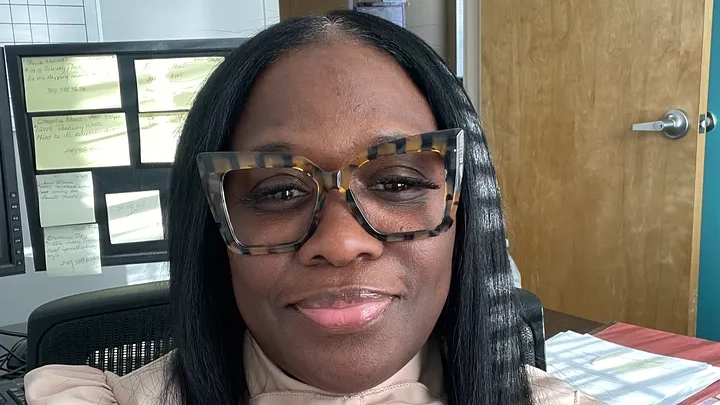
How Housing, Dignity, and Community Helped Lakeisha Rebuild Her Life

For 23 years, Lakeisha Williams was addicted to crack cocaine.
That sentence alone carries weight. But it does not carry her whole story.
“I tried many programs,” she said. “But none of them met all of my needs. Nothing seemed to fit.”
While incarcerated at the Merlin Correctional Institution for Women, she heard about Hope House, a housing program of The Ladies of Hope Ministries designed for women who have been incarcerated, who have struggled with substance use, and who have survived abuse and domestic violence.
“I am one of those women,” she said plainly.
When she was released, she made a decision that would change the trajectory of her life.
Before coming to Hope House, Lakeisha didn’t know how to put the pieces of her life back together. “I had been doing what was familiar for so long that the dysfunction felt normal.”
Her identity had been swallowed by survival. By addiction. By the labels others placed on her.
“I felt hopeless. It was a constant battle with negative thoughts.”
Then something shifted.
“I realized I had to get out of agreement with the lies spoken over me and the perceptions others had placed on me.”
That moment wasn’t just emotional. It was transformational. But transformation requires support. It requires structure. It requires safety.
And most of all, it requires someone to believe you are worth rebuilding.
A Different Kind of Welcome
“From the moment I arrived at Hope House, I was greeted with open arms,” Lakeisha said. “I could feel the love in the room.”
Not pity.
Not judgment.
Not surveillance.
Love.
The staff did not coddle her. They did not overwhelm her. They did something far more powerful.
“They pushed me, not in an unhealthy way, but with a gentle yet firm refusal to let me give up.”
They provided stability, food, and clothing. Access to mental health resources and employment opportunities.
But more than services, we provided belief.
“They made me feel like I mattered.”
And for a woman rebuilding after 23 years of addiction and incarceration, that belief is not small. It is foundational.

What Your Support Actually Builds
Because of Hope House and LOHM’s Rapid Rehousing programs:
Lakeisha is now employed. She has rebuilt relationships with her six children. She has repaired bonds that addiction once fractured, and now she wakes up with purpose.
“When I wake up in the morning, I wake up with purpose,” she said. “When I look in the mirror, I love the person I see.”
That is not just personal growth.
That is generational repair.
“Ladies of Hope didn’t just help me survive, they helped me rebuild my life.”
Why This Matters
Housing is not just a roof.
It is the difference between relapse and recovery. Between isolation and community, shame and self-worth. Between surviving and living.
Lakeisha’s story is not an exception. It is evidence.
Living proof that when women are given safe housing, structure, and sustained support, they do not just stabilize — they rise beyond measure.
They reunite with their children.
They enter the workforce.
They contribute to their communities.
They reclaim their names.
A Thank You And An Invitation
Lakeisha closes her impact statement with gratitude:
“I want to thank Dr. Sam for paving the way for women like me. For believing in us. For opening doors.”
But this work is not powered by one person.
It is powered by donors.
By partners.
By funders who understand that reentry requires investment.
And people who refuse to see women as disposable.
If you are reading this, you are part of that story.
And more women just like Lakeisha are waiting for a door to open.
When you give to The Ladies of Hope Ministries Housing programs, you are not funding a temporary shelter.
You are funding stability, family reunification, and second chances that ripple for generations.
Because every woman deserves the chance to say:
“I got out of agreement with the lies. And I rebuilt my life.”
Lakeisha’s story is not about rescue. It is about access.
Housing creates the conditions for change. When stability is funded and sustained, it reduces returns to incarceration, strengthens families, and allows people to move forward with dignity.
In 2025, LOHM invested more than $1.22 million directly into rental assistance. Stories like Lakeisha’s show why that investment matters.
Housing is not the finish line. It is the starting point. To support this work, visit thelohm.org.