
Job Training for Justice-Impacted Women: What It Takes to Make a Free Certificate Count
.webp)
Job training changes a justice-impacted woman's life when three things are true at once: the training costs her nothing, the credential is one employers already recognize, and someone stays with her after the last class. At The Ladies of Hope Ministries (The LOHM), all three live inside Pathways 4 Equity, our employment and entrepreneurship program. Our Google Career Certificate scholarship covers the full cost of the certificate. The certificate opens a door. The support around it is what gets her through it.
This post is co-authored by Dr. Alina Feas, who facilitates our Grow with Google digital skills classes and went through Pathways 4 Equity herself.
Why is it so hard for women to find work after incarceration?
Because a record follows a woman into every application long after her sentence ends. The Prison Policy Initiative found that formerly incarcerated people face an unemployment rate of 27.3%, roughly five times the general public. The gap is widest for the women we serve: 43.6% for formerly incarcerated Black women, compared to 18.4% for formerly incarcerated white men.
That is not a story about willingness. The same research found 93.3% of formerly incarcerated people between 25 and 44 are either working or actively looking for work, a higher rate than the general public. The women in our classrooms are trying. The market is not letting them in. Source: Prison Policy Initiative, Out of Prison and Out of Work.
What is Pathways 4 Equity?
Pathways 4 Equity, which we call P4E, is our employment and entrepreneurship program for justice-impacted people. It is not a single class. It is the through-line: professional skills training, credentials, a paid Career Ready Fellowship, and the relationships that keep a woman connected to us after she finishes. You can read the full program overview on the Pathways 4 Equity page.
P4E exists because a certificate handed to a woman with no housing, no transportation, and no one in her corner is a piece of paper. Wrapped in support, it is a career.
Where the Google Career Certificate scholarship fits
The scholarship is the credential layer inside P4E, and it costs the participant nothing. The LOHM covers the full tuition for a Google Career Certificate delivered through Coursera. Here is what a participant gets:
- A choice of tracks, including data analytics, project management, IT support, cybersecurity, and UX design.
- Full tuition coverage. No fee, no deposit, no repayment.
- No degree requirement and no prior experience requirement.
- A trainer who has walked women through the same coursework before, not a link to a self-serve portal.
Current tracks and the application form live on the Google Career Certificate scholarships page. If you want a live instructor rather than self-paced study, we also run Google trainer-led classes.
What the classroom actually looks like, by Dr. Alina Feas
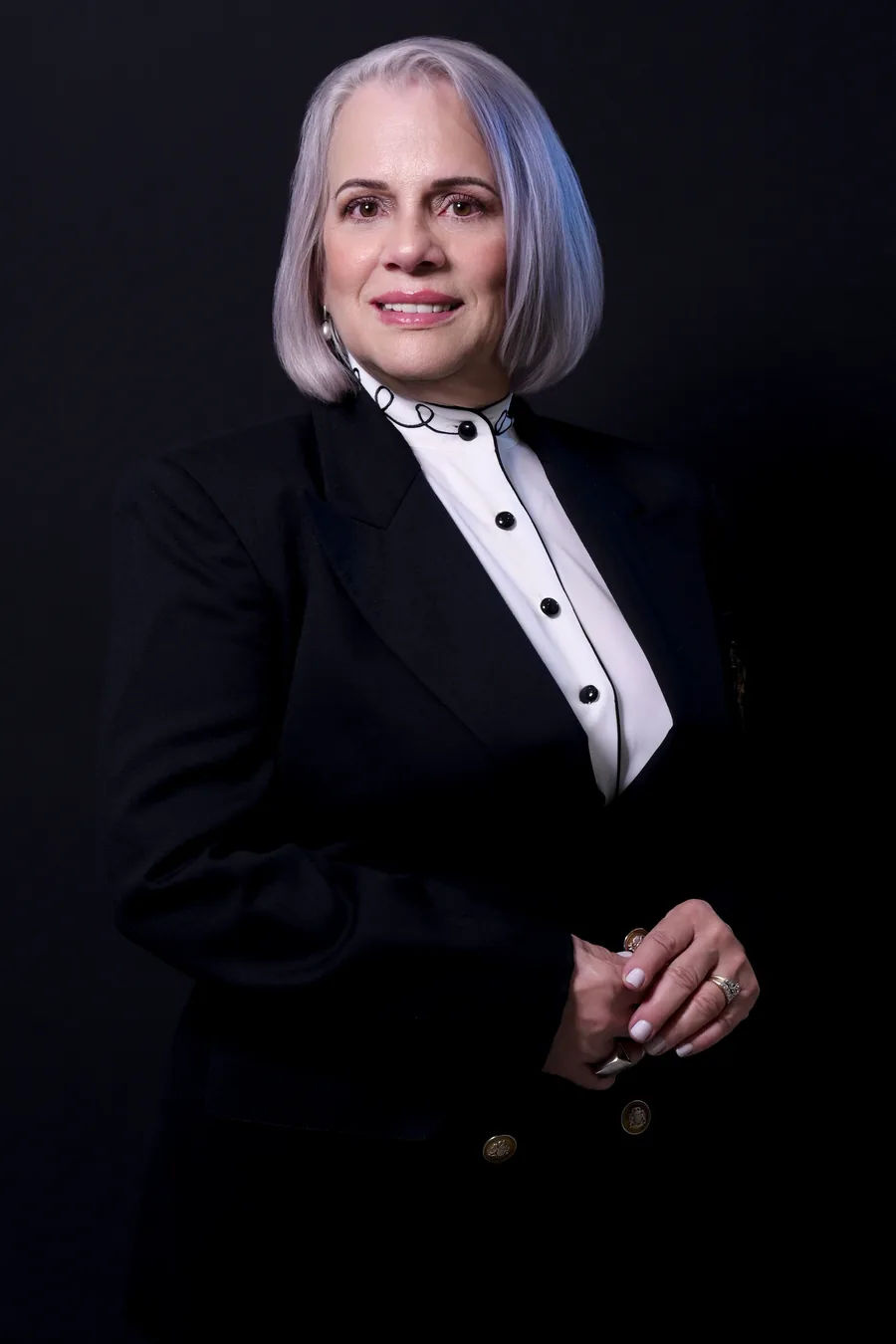
I am Dr. Alina Feas, and I am a justice-impacted woman whose life changed the moment I decided to reinvent my future through training and education. When I was released from prison after nine years in federal custody, I was totally lost. A friend recommended The Ladies of Hope Ministries, and I contacted them immediately. Finding The LOHM was a lifesaving experience.
I completed the P4E program, and that experience became the foundation for everything that came after. Those classes gave me my confidence back and prepared me with the tools I needed to start over. More importantly, they gave me purpose and a new vision. Through The LOHM, I also enrolled in the Grow with Google digital skills training courses, and for the first time in years I saw myself as someone capable of creating a new path.
After completing the training, I became a contractor for The LOHM and began facilitating digital skills training for Spanish-speaking justice-impacted women virtually. When The LOHM opened its Miami office, I expanded my work to include English-speaking participants online and Spanish-speaking participants in person. My role grew from student to facilitator.
Today I also facilitate digital skills classes inside TGK, a county jail in Miami, where I work with women who remind me of my own journey. Some are Spanish-speaking, some are older beginners, and all are carrying the emotional weight of learning something new in a correctional setting.
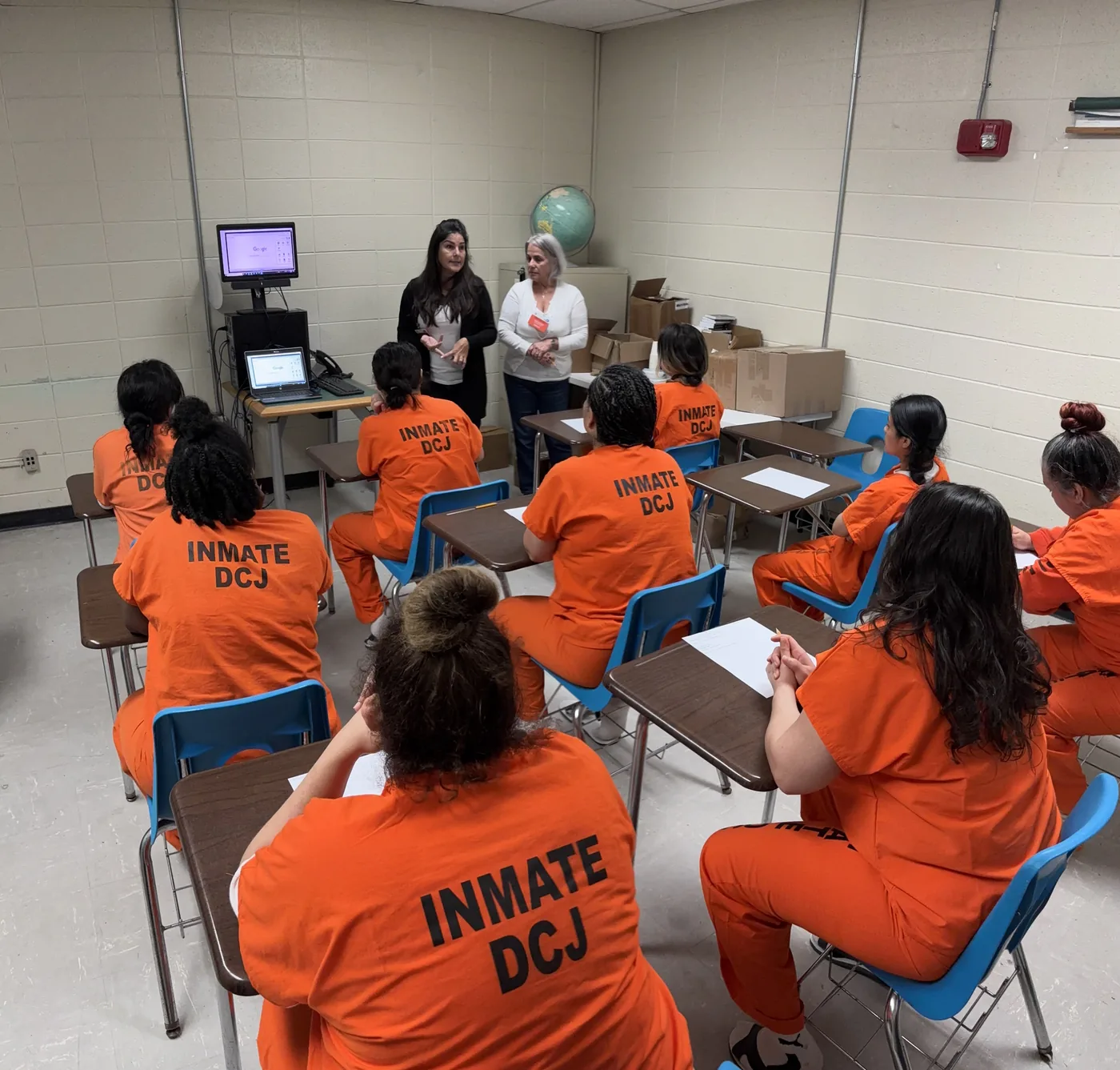
The first day is always tender. They sit down with a mix of excitement and fear. They worry about looking slow. They worry about not understanding the language or the technology. They worry about how they will manage a computer after years without one. Some are afraid of failing before they begin. Others are afraid of succeeding, because success means imagining a future they have not dared to picture. I remember that feeling. I know what it is like to wonder whether you belong in a classroom. That is why I spend the first hour lowering the temperature in the room, reminding everyone that nobody is expected to know everything on day one and that learning is not a test of your worth.
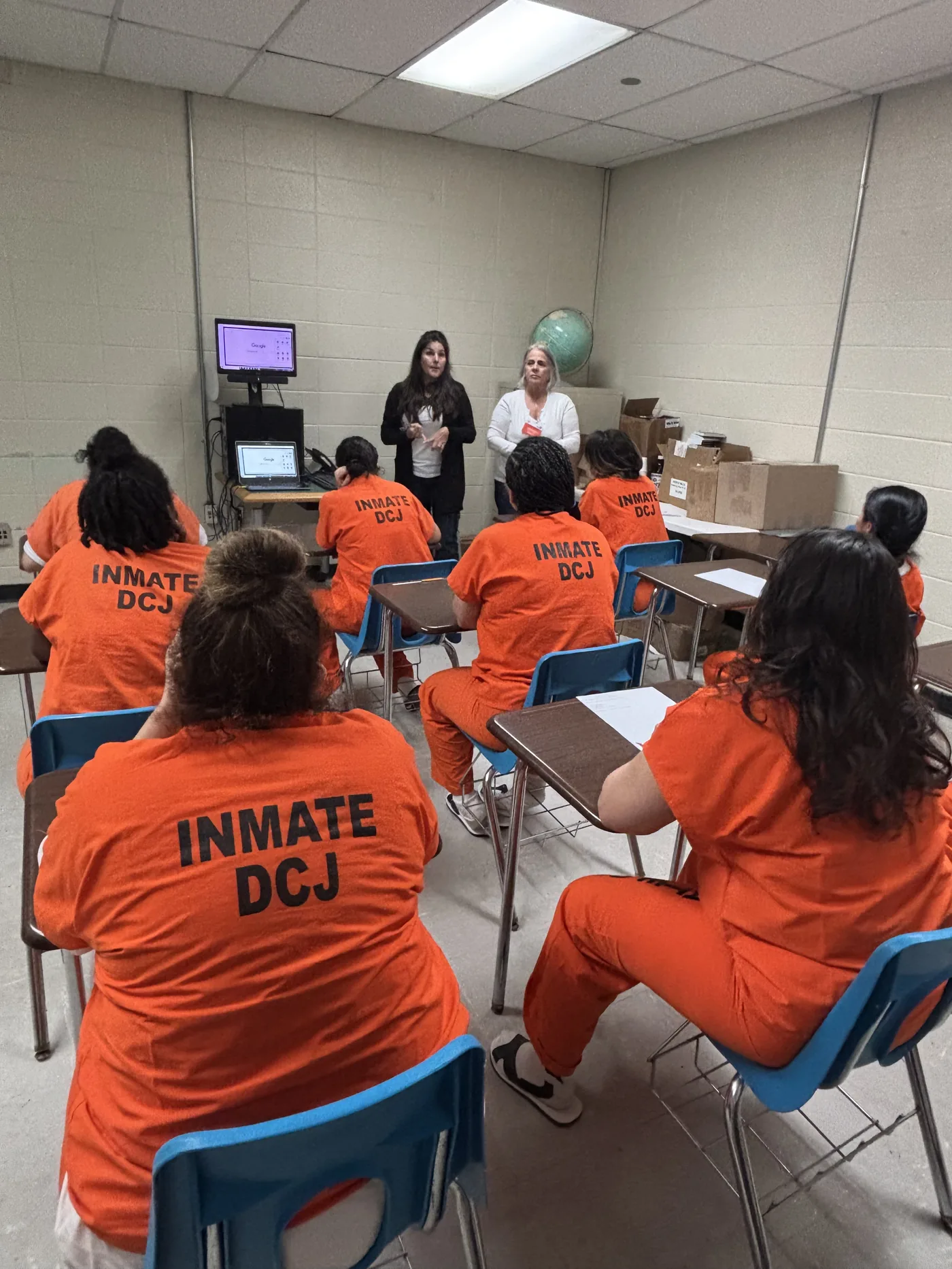
The barrier nobody outside the room would guess is not the software. It is the emotional cost of being a beginner at an age when the world expects you to already know everything. Device access matters, because in prison there is limited or no access to a computer. Following a syllabus after years away from school matters. Working in a second language matters. The biggest one is the quiet voice saying, "I am already too old. I do not belong in a tech class." That voice gets louder in a correctional setting, where confidence has been chipped away by circumstance.
Because the women I serve are justice-impacted, and because I am one of them, I teach differently. I slow down. I repeat instructions without making anyone feel behind. I build lessons around dignity, not deadlines. I avoid assumptions about what someone already knows. I use trauma-informed practices at every step: choice, patience, humor, gentleness. Above all, I treat every woman as someone already capable, intelligent, and deserving of an opportunity. The tech skills matter in today's workforce. The healing that happens around them matters more.
One moment has stayed with me. A woman in her seventies who had never worked with a computer needed to learn how to write and share her story using Google tools. I guided her slowly through all of it, from the keyboard and the browser to using Google Workspace and sharing a document through Google Drive. When she saw her document on the screen, she covered her mouth and cried. Not because typing is hard, but because seeing her work in a digital space made her feel visible again. Progress is not measured in speed. It is measured in courage.
What changes after the certificate
The clearest proof that this works is who is standing at the front of the room. Dr. Feas arrived at The LOHM as a participant and now facilitates the classes she once sat in. Pathways 4 Equity does not train women and send them away. It builds the people who build the next class.
A recognized credential does three practical things for a woman rebuilding after incarceration. It gives a hiring manager something to evaluate other than a background check. It gives her a vocabulary for interviews. And it gives her a start date, which is often the only thing standing between her and the rest of her plan.
You can see where that leads in Marta Barreto's path from the Pathways 4 Equity fellowship to a rocket propulsion team.
Real talk: what a certificate does not fix
A Google Career Certificate does not erase a record, and we do not pretend otherwise. Women finish this program and still get screened out. They still hit occupational licensing rules that bar them from fields they trained for. They still lose an offer at the background check stage.
That is why the certificate sits inside a program instead of standing alone. Housing comes first, which is why we run safe, trauma-informed housing alongside employment. If a woman does not have a safe place to sleep, a Tuesday night class is not the first problem to solve. We say this out loud because women deserve an honest picture of what a program can and cannot do.
Open a door with us
Every scholarship we fund is one woman who does not have to choose between rent and a credential. Three ways to help right now:
- Give. Fund training, transportation, and the support that keeps a participant enrolled.
- Hire. If your company hires fair chance, join #HireHer or become a Pathways 4 Equity partner.
- Share. Send this post to a woman who needs it, or to someone who works with women coming home.
Questions? Call us at (646) 820-0011 or email info@thelohm.org.
Frequently asked questions
Who is eligible for a Google Career Certificate scholarship through The LOHM?
Justice-impacted women who are ready to start training. There is no degree requirement and no prior work experience requirement. Applications and current eligibility details are on the Google Career Certificate scholarships page.
Does the scholarship cost anything?
No. The LOHM covers the full cost of the certificate through Coursera. There is no fee, no deposit, and nothing to repay.
How long does a Google Career Certificate take to finish?
It depends on your pace, and it will rarely take less than four months. If you are working while you study, a realistic range is six to twelve months. The courses are self-paced, so the timeline is yours.
Which certificate should I choose?
Project management, cybersecurity, and data analytics are the ones we point to most often, but the right track depends on your interests and the career you want. Our trainers will talk it through with you before you enroll.
Can I apply while I am still incarcerated?
Not for the online coursework. Facilities like TGK do not provide the internet access the courses require, so women take our in-person digital skills classes inside and enroll in the certificate once they are home. After release, including on probation or parole, you can register and start right away with a computer and an internet connection.
Where does my donation go?
Gifts support Pathways 4 Equity training, transportation, and the participant support that keeps women enrolled and moving toward work.